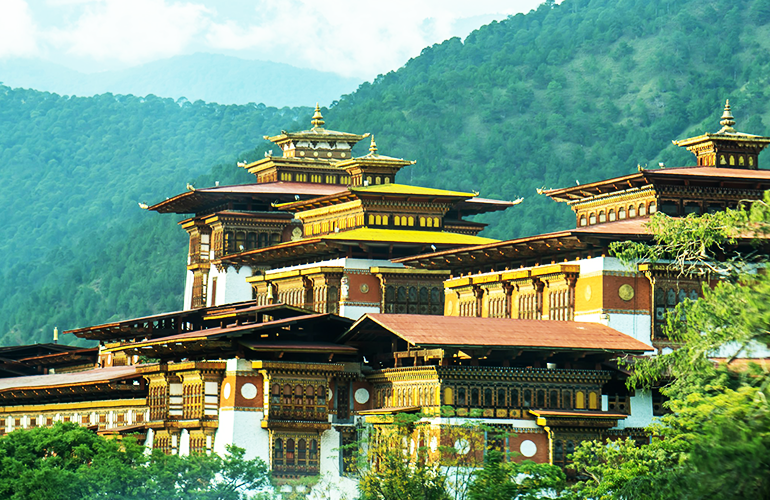
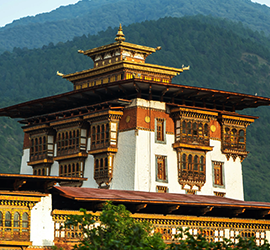
In the annals of Bhutan's history, a resplendent jewel known as Punakha Dzong, translating to the "fortress of Great Bliss," stands as a testament to the unwavering spirit of the nation. In 1673, under the visionary guidance of Zhabdrung Ngawang Namgyel, the revered first spiritual and political leader of Bhutan, this architectural marvel came into existence. Its genesis was a profound tribute to the triumph over a series of relentless Tibetan invasions.
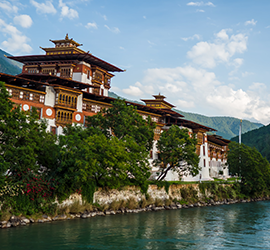
Nestled upon a plot of land cradled by the embrace of two rivers, the Pho Chhu and the Mo Chhu, poetically christened the "male" and "female" rivers, this Dzong rises as a colossal and magnificent edifice of architectural grandeur. Its sheer size and intricacy command admiration, a resplendent embodiment of Bhutan's cultural and historical heritage.
Though subjected to the ravages of floods, fires, and seismic tremors on numerous occasions, the indomitable spirit of Punakha Dzong perseveres. Each time adversity sought to mar its splendor, it was reborn, faithful to its original pattern and design, rising from the ashes and ruins, a phoenix of architectural and historical significance.
YoEnzo Tours and Treks provides unparalled luxury, adventure, and nature tours, designed to create unforgettable memories





© Copyright 2026 YoEnzo Tours and Treks | Design By Indra Gotamey