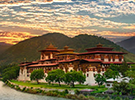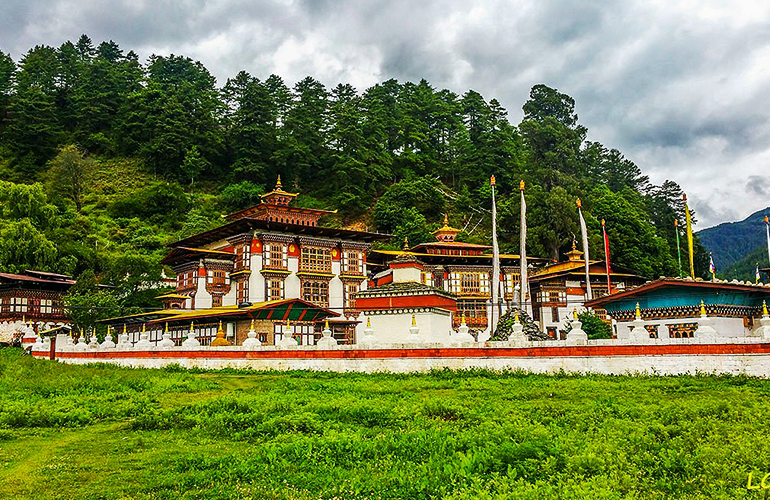
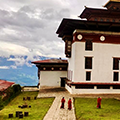
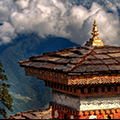
Named after the body (kur) print (jey) of Guru Rinpoche preserved in a cave, the Kurjey Lhakhang complex comprises three significant temples. The oldest, Guru Lhakhang, dates back to 1652, constructed by Mingyur Tenpa during his tenure as Trongsa's penlop. A symbol of the legendary conflict between Guru Rinpoche and the local demon Shelging Kharpo, a snow lion figure with a jachung (garuda) perches beneath the temple's eaves. The inner sanctum houses the concealed statue of Shelging Kharpo, adding an air of mystery to this revered and historic temple complex.
At the entrance to the lower-floor Sangay Lhakhang lies a small rock passage, believed by Bhutanese to purify sins as one crawls through. Behind the three Buddha statues, a secret passageway, once leading to Tharpaling, remains concealed. The upper-floor sanctuary, the complex's holiest space, hosts 1000 small statues of Guru Rinpoche along the left wall, alongside statues of Pema Lingpa and Drolma (Tara). The main statue, Guru Rinpoche, stands flanked by eight manifestations and eight chortens, concealing the meditation cave with his body imprint. The far wall displays images of Guru Rinpoche, his manifestations, 25 disciples, and figures linked to the Guru. Legend surrounds the large cypress tree behind the lhakhang, believed to have sprouted from Guru Rinpoche's walking stick.
The Kurjey Tsechu, a renowned festival occurring in June, features a masked dance vividly portraying Guru Rinpoche's triumph over Shelging Kharpo. Preceding the dances, monks from Trongsa unfurl the Guru Tshengye Thondrol, a sizable thangka illustrating the eight manifestations of Guru Rinpoche. This vibrant celebration encapsulates the spiritual essence of Bhutan's cultural heritage.
YoEnzo Tours and Treks provides unparalled luxury, adventure, and nature tours, designed to create unforgettable memories

© Copyright 2026 YoEnzo Tours and Treks | Design By Indra Gotamey