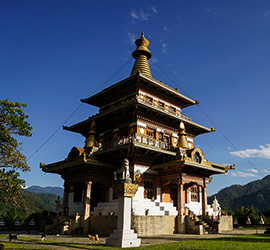
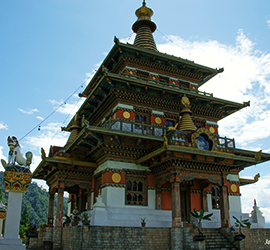
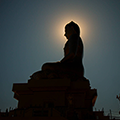
A testament to regal grace and spiritual devotion, the celestial marvel known as Khamsum Yulley Namgyal unfurls its splendor, a majestic chorten or stupa conceived in the year 2004 under the tender hands of the esteemed Queen of Bhutan. Poised like a guardian spirit, it gazes benevolently upon the Punakha Valley, a beacon of transcendence echoing through the ages. Imbued with a sacred purpose, this resplendent creation stands as a celestial fortress, designed to cast away malevolent shadows that traverse both the realms of Bhutan and the wider world. Despite its infancy in the chronicles of time, Khamsum Yulley Namgyal emerges as a paragon of tradition, meticulously crafted in adherence to ancient teachings. For nine celestial years, Bhutanese artisans, their hands imbued with skill and devotion, toiled harmoniously to give rise to a four-story pagoda-style stupa. In its sublime presence, smaller pagodas, adorned with the sacred hum of prayer wheels, grace the surroundings, creating a sanctuary where peace and harmony intertwine with the whispers of the divine.
Within the sacred embrace of Khamsum Yulley Namgyal, the chorten unfolds a celestial narrative, delving into the enigmatic realm of wrathful deities—a concept that, at first glance, may appear paradoxical. As you step into the hallowed expanse of the main room on the inaugural floor, an awe-inspiring revelation awaits—a towering 15-feet-tall manifestation of Vajrakilaya, a revered deity among the pantheon of Kagyé. Despite the veneer of wrath that cloaks Vajrakilaya, a profound truth resonates—his formidable fury is a noble crusade against forces antagonistic to compassion, a sacred alchemy that purifies their malevolent potency. Ascending through the sanctified tiers of the second and third floors, statues and shrines to these wrathful deities stand sentinel, each an ethereal bastion offering protection against the shadows that loom menacingly in the world. To harmonize the cosmic balance, the walls bear witness to the enchanting dance of yab-yum figures, where male deities entwine with their female consorts—a sublime tableau that illuminates the union of wisdom and compassion, a sacred marriage that transcends mortal understanding.
YoEnzo Tours and Treks provides unparalled luxury, adventure, and nature tours, designed to create unforgettable memories




© Copyright 2026 YoEnzo Tours and Treks | Design By Indra Gotamey