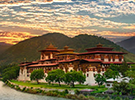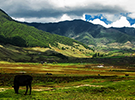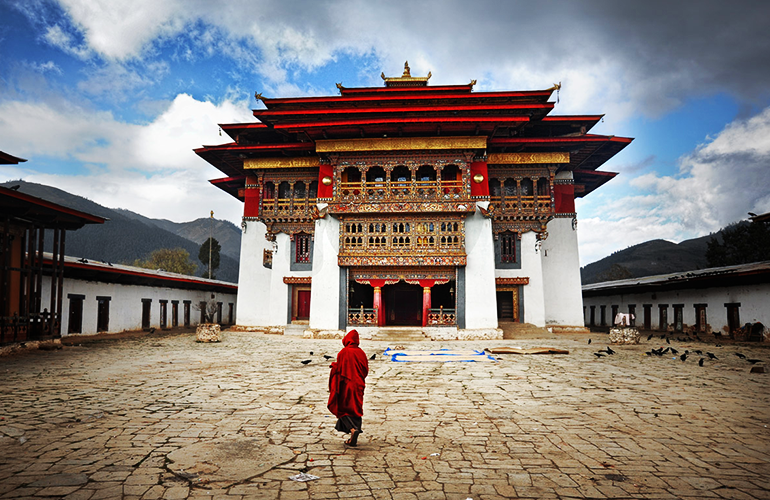
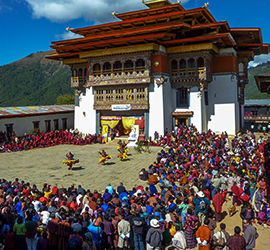
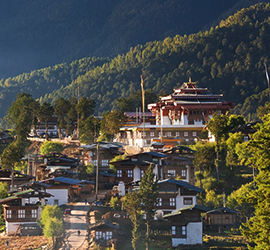
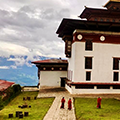
Gangteng Monastery, a cornerstone of the 17th-century Pema Linpa tradition within the Nyingma school of Buddhism, commands breathtaking views. Serving as the focal point for the Gangtey Nature Trail, visitors often pay homage to the temple before embarking on their journey. Presently, it serves as the spiritual seat for the 9th reincarnation of Terton Pema Lingpa. An enchanting belief persists that the revered Black-Necked Cranes perform a sacred circumambulation around the monastery before gracing the valley with their winter presence, and again as they embark on their summer pilgrimage to Tibet. The annual Black Neck Cranes festival unfolds within the hallowed walls of Gangtey Monastery on the 11th of November, a cherished celebration of nature's cyclical dance.
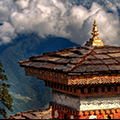
Established in 1613 on a Black Mountains spur, Gangtey Monastery, or Gangteng Sang Nga Chöling, meaning "summit for the teaching of the dharma," was founded by Pema Lingpa's grandson. Crafted with local timber, the temple's beams, doors, pillars, and windows reflected the essence of its surroundings. Ravaged by an earthquake, the monastery underwent meticulous restoration from 2002 to 2008. Preserving original details and introducing over 100 new pillars, the rebuilt complex was consecrated in 2008 by Pema Lingpa's present incarnation, attended by Bhutan's fourth king, Jigme Singye Wangchuck. This four-storey sanctuary, featuring five temples encircling a central tower, houses the tshokhang, built in Tibetan style, with the upper part adorned in timber wood and colors from natural minerals. The main hall, supported by eight colossal wooden pillars, stands as the largest in Bhutan and is currently overseen by approximately 100 lay monks, known locally as gomchen.
YoEnzo Tours and Treks provides unparalled luxury, adventure, and nature tours, designed to create unforgettable memories

© Copyright 2026 YoEnzo Tours and Treks | Design By Indra Gotamey