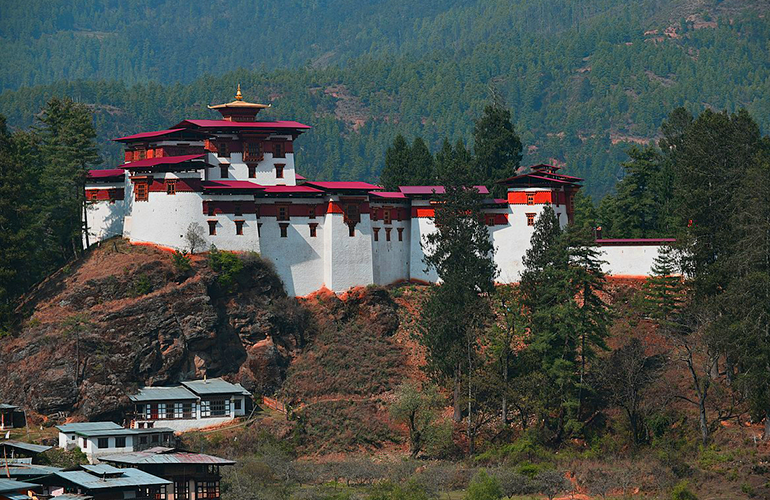
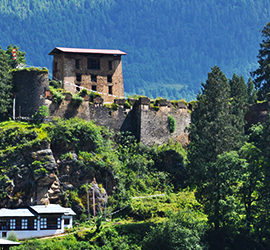
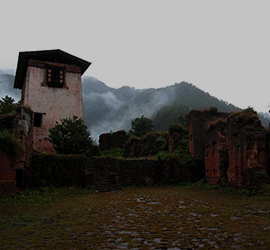
Nestled gracefully upon a ridge in the ethereal upper Paro valley, the venerable ruins of Drukgyel Dzong stand as a testament to Bhutan's rich historical tapestry. Regarded with admiration as one of the most exquisite and renowned archaeological gems in the kingdom, this ancient edifice was meticulously constructed in 1649 and stood steadfast as a pivotal bastion of defense until the fateful year of 1951. Alas, a capricious inferno engulfed the majestic Dzong, leaving in its wake a hauntingly beautiful ruin. Yet, in the aftermath of this fiery tempest, the vestiges of Drukgyel Dzong retained an aura of profound significance. These crumbling remnants, like silent sentinels of bygone epochs, persist as an enduring monument, weaving together the very fabric of Bhutan's narrative. They bear witness to the epic events that once unfolded within their fortified walls, events that stood as beacons in safeguarding the sovereign spirit of this majestic land.
Unlike the splendid tapestries of Dzongs woven by the visionary Zhabdrung Ngawang Namgyal and his esteemed successors, the venerable Drukgyel Dzong stands as a singular testament to the unwavering dedication to defense, eschewing the multifaceted roles of administration and religiosity. This fortress, a bastion against external threats that loomed ominously along the border, distinguished itself as a sentinel solely devoted to the preservation of the kingdom's integrity. Within its ancient walls, Drukgyel Dzong housed an arsenal that stood unrivaled, embodying the pinnacle of military prowess during its epoch. The very name, a harmonious amalgamation of 'Druk' (the local moniker for Bhutan) and 'Gyel' (signifying victory), whispers the tale of a poignant victory etched into the annals of Bhutanese history. Legend has it that this architectural marvel arose to commemorate Bhutan's triumphant resilience against the formidable forces of Tibetan and Mongolian invaders, who dared to breach the sacred thresholds of this enchanting realm. Nestled strategically near the border with Tibet, Drukgyel Dzong emerged as a formidable bulwark, an enduring symbol of the nation's indomitable spirit poised against the specter of future incursions.
YoEnzo Tours and Treks provides unparalled luxury, adventure, and nature tours, designed to create unforgettable memories



© Copyright 2026 YoEnzo Tours and Treks | Design By Indra Gotamey